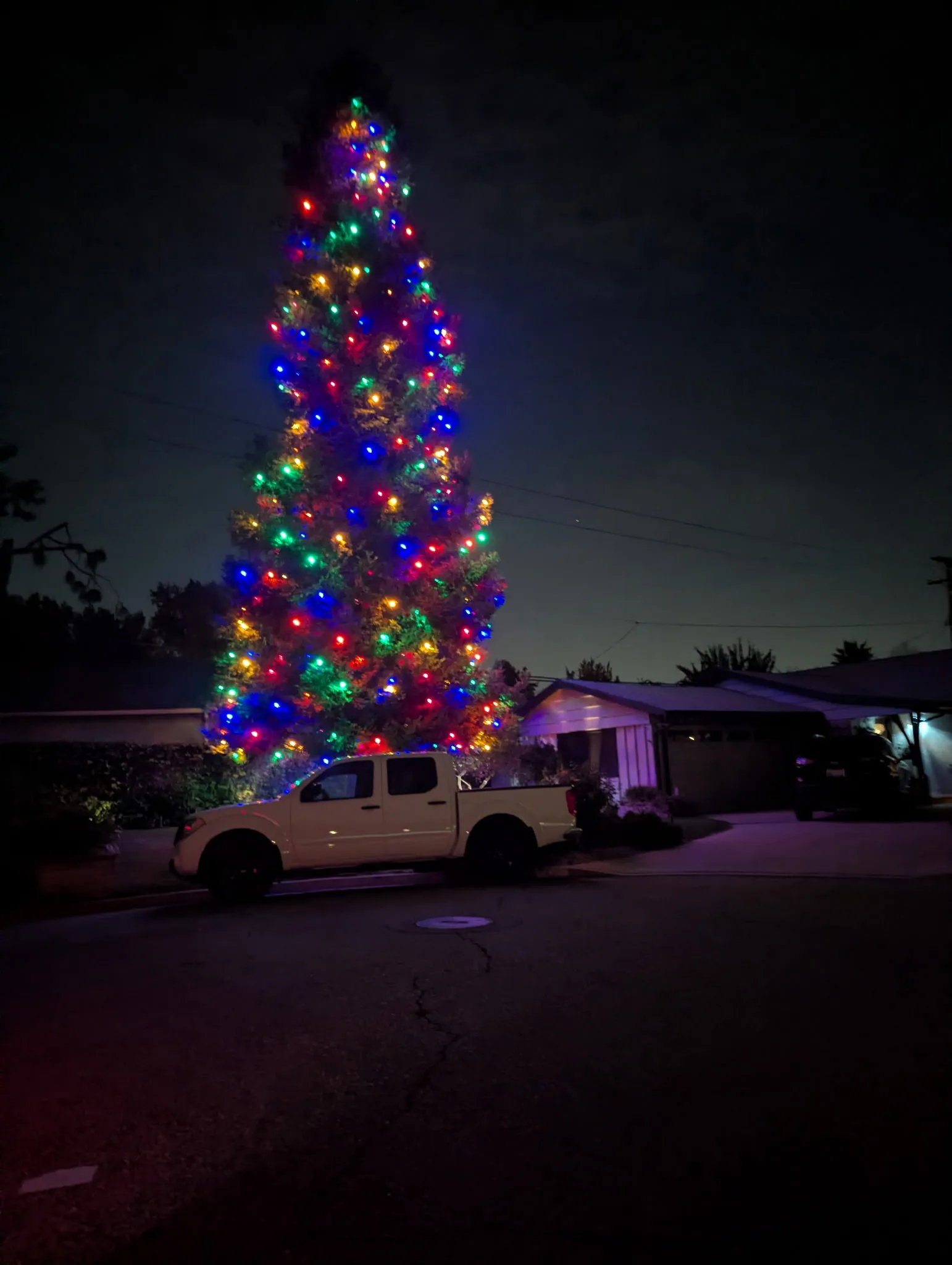
In a snowier climate, fresh greenery is a safe default, cool, damp air keeps a noble fir wreath crisp well past New Year's. Los Angeles rewrites that rule. Between warm afternoons, single-digit humidity during a Santa Ana, and low winter sun raking across south-facing façades, a beautiful fresh garland can turn brittle faster than most homeowners expect. Here's how the materials actually behave here, and how our decorators decide when to use fresh, when to reach for premium faux, and how to blend the two.
Why LA's December Is Hard on Fresh Greenery
Fresh-cut evergreens start losing moisture the moment they leave cold storage, and Southern California accelerates the process on every front. Daytime temperatures that flirt with the 70s and 80s, dry offshore winds that can drop humidity into the teens, and a low, direct winter sun all pull water out of needles and leaves. Indoors, the swing between afternoon heat and evening air conditioning does the same thing more quietly.
None of this means fresh greenery is a mistake in LA, it simply means the clock runs faster here. Prep and placement matter far more than they would in Chicago or Denver, and the difference between a display that looks lush on New Year's Eve and one that browned out before Christmas usually comes down to decisions made on install day.
How Long Fresh Noble Fir Actually Holds Up Here
When we do use fresh, noble fir is the one we reach for first. Its branches are stiff and well-spaced, the blue-green needles carry a waxy coat that resists dropping, and the fragrance is the classic Christmas scent people picture. On a shaded, north-facing entry, a well-prepped noble fir wreath or garland can look showroom-fresh for two to three weeks. Push that same piece into full west-facing afternoon sun, or run it through a multi-day Santa Ana event, and the good-looking window can shrink to well under two.
That's the honest trade. Fresh greenery delivers two things faux still can't fully match, real fragrance and up-close realism, so it earns its place exactly where guests stand closest. It's worth knowing the alternatives, too: fresh cedar drapes gorgeously but dries quickly, while glossy Southern magnolia and silvery olive branches suit LA's palette and tend to hold longer than soft-needled evergreens.
The Techniques That Keep Fresh Greenery Alive Longer
Most of the gap between greenery that looks tired by mid-December and greenery that lasts comes down to prep and placement, not luck. The professional toolkit is straightforward:
- Anti-desiccant spray. A pine-oil-based anti-transpirant, applied before installation, coats the foliage and slows moisture loss, the single biggest lever for extending fresh greenery outdoors.
- Keep it cold, cut it fresh. Store material in shade or cold until the last possible moment, and re-cut stem ends so they can take up water. Wreaths and garland can be soaked overnight before they go up.
- Hydrate the tablescape. For dining centerpieces, individual stems sit in floral water tubes or a soaked base so they stay crisp through a run of dinner parties.
- Place it out of the sun. Favor shaded and north-facing exposures, and keep fresh material away from heater vents, hot west-facing windows, and doorways that bake in the afternoon.
- Mist on cool mornings. A light misting buys real time, especially through a dry spell.
When Premium Flocked Faux Is the Smarter Choice
Faux has a reputation problem it mostly earned in the era of thin PVC "bottle-brush" branches. Premium faux is a different product: molded polyethylene (PE) tips replicate individual needles closely enough to read as real at arm's length, and the best outdoor pieces are UV-stabilized so they don't fade in the sun. Flocked greenery, that soft, artificial-snow finish, actually looks its most luxurious in a warm climate, precisely because nothing about the weather threatens it.
Faux is the smart call whenever longevity or access matters more than fragrance: tall foyer trees and high roofline swags that are impractical and unsafe to re-hang mid-season, long architectural runs, and anything sitting in punishing full sun. The upfront cost is higher than a single season of fresh, but a quality faux garland is priced as a multi-season investment rather than something re-bought every December. You can see the flocked and PE pieces we install in our holiday decor catalog, and for rooflines specifically, many clients pair faux greenery with permanent architectural LED so the hardest-to-reach lighting never has to come down at all.
How the Best Displays Blend Fresh and Faux
The luxury approach is rarely either/or. Faux forms the durable architecture of a display, banister garland, the twenty-foot entry tree, exterior columns, roofline swags, because that structure has to look consistent from Thanksgiving through the New Year without anyone climbing back up a ladder. Fresh goes where people get close and where scent does real work: the front-door wreath guests pass through, the dining-table centerpiece, the mantel.
The finishing move is to tuck fresh accents into a faux base, cedar, eucalyptus, magnolia, olive, or berry stems woven through a permanent garland for movement and fragrance. The faux structure stays put all season while the fresh elements get refreshed mid-December, giving you the realism of fresh with the reliability of faux. If you're planning a full home, start early; the best holiday design calendars fill by fall, and greenery decisions are easiest to make before the material is spoken for.
Key Takeaways
- ✓ Fresh noble fir is unmatched for fragrance and close-up realism, but LA's dry heat and Santa Ana winds put it on a clock.
- ✓ Expect roughly two to three weeks from fresh greenery in shade, noticeably less in full afternoon sun or during a wind event.
- ✓ Anti-desiccant spray, cold storage, re-cut stems, and shaded placement meaningfully extend how long fresh material lasts.
- ✓ Premium flocked or molded-PE faux is the smarter pick for high, sunny, or hard-to-reach architectural runs.
- ✓ Faux costs more upfront but amortizes across many seasons; fresh has to be re-bought every year.
- ✓ The designer move is a blend: faux for the durable structure, fresh accents where guests get close.